
Search results for
(Showing 270-285 out of 337 results)
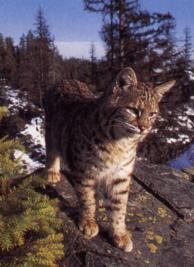
The large coniferous forest found in Canada is called the Taiga. There are many swamps, mountains and forests in the Taiga that are home to the Bobcat. Throughout much of the United States the bobcat lives in forests, but can also be found in desserts and chaparral.
Read More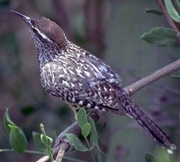
The Cactus Wren lives in the arid and semi-arid deserts of southwestern United States and the chaparral of southern California and northern Mexico. The Cactus Wren is usually found below 4,000 feet. The California chaparral has hot and dry summers and humid and cold winters. It normally gets about 6 inches of rain per year.
Read More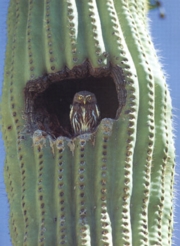
For a tiny bird, the cactus ferruginous pygmy-owl has a very long name. It is small enough to hold in your hand. It averages 6.5 inches (17 cm) in length and weighs only 2.5 ounces (62 g). Females usually weigh a few tenths of an ounce more than the males.
Read More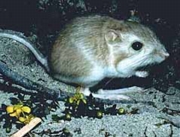
The kangaroo rat is a very cute little critter that kind of looks like a mini kangaroo, but is as big as a mouse.It has large hind legs and feet. It usually grow to about 14 inches (38 cm) in length, including its tail. Its hair is a yellow buff color above and white below.
Read More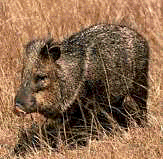
The javelina is the only wild pig in North America. It looks exactly like a real pig except a little bigger. It is a grizzled blackish-gray color with a yellowish band which runs under the neck. The name collared peccary comes from the ruff of hair around its neck.
Read More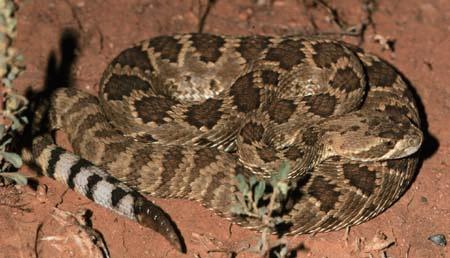
As the name says, this snake lives in the Mojave Desert of California. It can also be found in the extreme western part of Texas, and Southern Nevada to Puebla, near the southern edge of the Mexican plateau.
Read More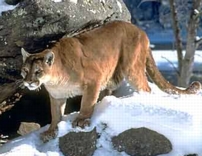
The puma is all one color. It can vary from silver gray, to tawny to reddish. It is lighter colored around the face area, with white around its whiskers and mouth. The males can weigh up to 200 pounds. They have large feet and their hind legs are longer than most of the cat family.
Read More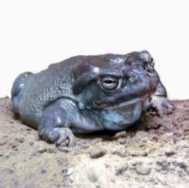
A toad is a small animal without a tail that looks alot like a frog. It is a type of animal called an amphibian. That means that toads live in water and on land. Toads have dry, warty skin with a raised area behind the eyes.
Read More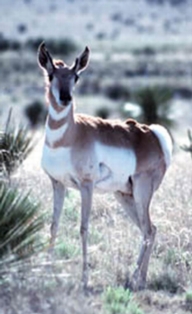
Pronghorn Antelopes are native to America and are found nowhere else in the world. They are the last surviving member of the Antilocarpidae family. Once they were as abundant as the buffalo. But by the 1920s only about 13,000 animals remained.
Read More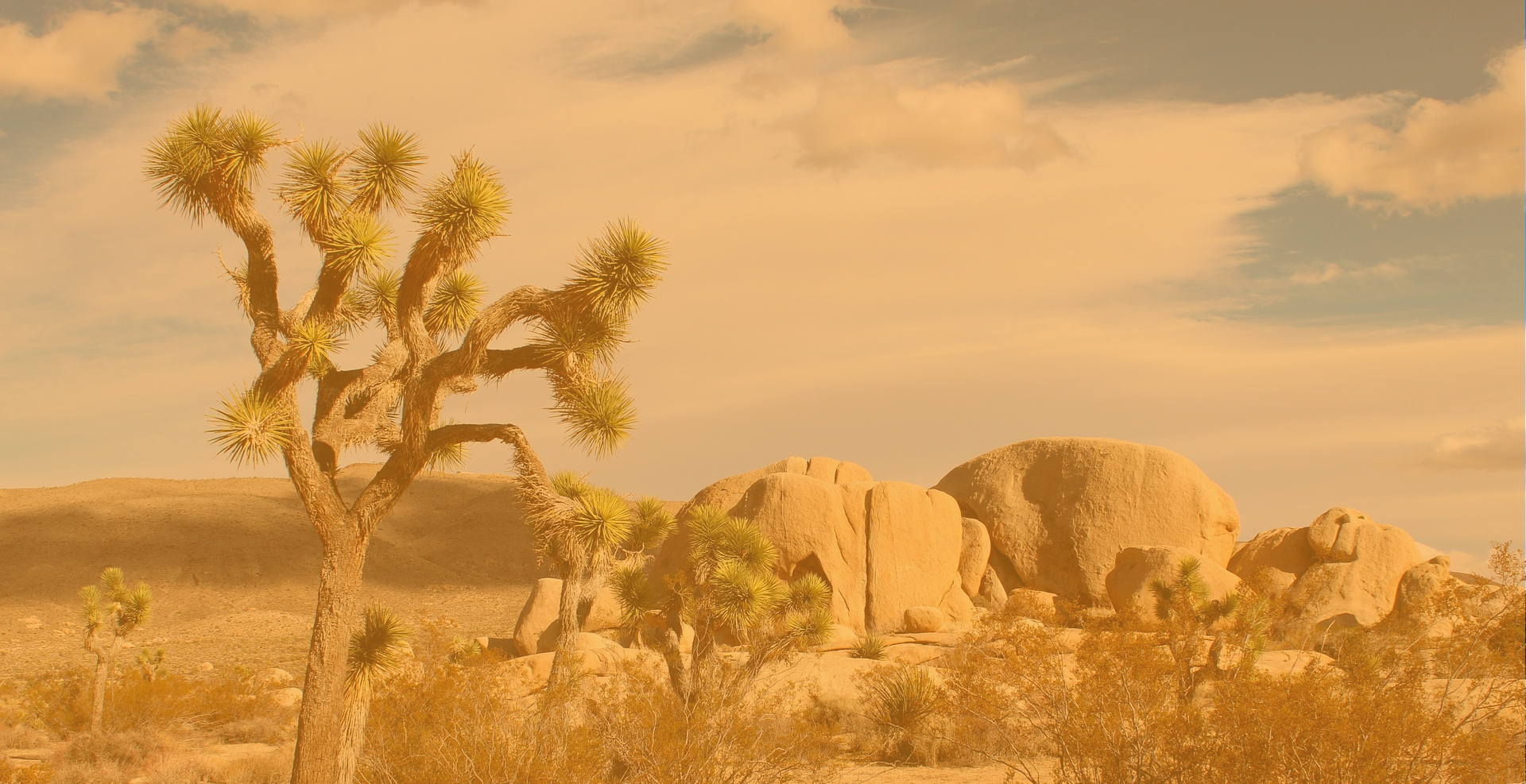
The Mojave or Mohave Desert, is the smallest of the four North American deserts. It lies in South Eastern California at 35° to 36° latitude North and 115° to 117° longitude East. The Mojave Desert is situated between the Great Basin Desert to the north (a cold desert) and the Sonoran desert to the south (a hot desert).
Read More
The brittlebushis a common plant of the Mojave and Sonoron deserts. It is a small deciduous shrub which grows as a low, roundish mound 2 to 5 feet high. Brittle branches sprout from a woody trunk. The leaves have serrated edges, and are broader at the base than at the tip.
Read More
The common saltbush is often mistaken for "sagebrush". It is actually related to the "tumbleweed", or Russian thistle and is part of the "goosefoot" or "pigweed" family. Other members of this family considered weeds include arrowweed and kochia.
Read More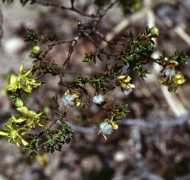
The Creosote Bush is named that way because it smells a lot like the creosote tar that is used on telephone poles to preserve the wood. This shrub is mostly found in the southwest part of America and the northwest part of Mexico.
Read More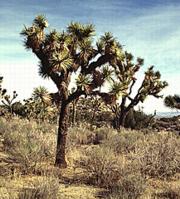
The Joshua Tree got its name from the Mormon pioneers who thought the tree reminded them of Joshua, from the old testament of the Bible, a prophet who was waving them on to the Promised Land.
Read More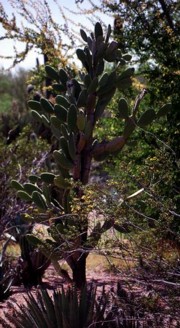
The prickly pear cactus is a widely used and versatile cactus. It can be used in many different ways such as foods, crops, etc.. In many places the prickly pear is grown as a crop, but in others they are just grown in the wild.
Read More